

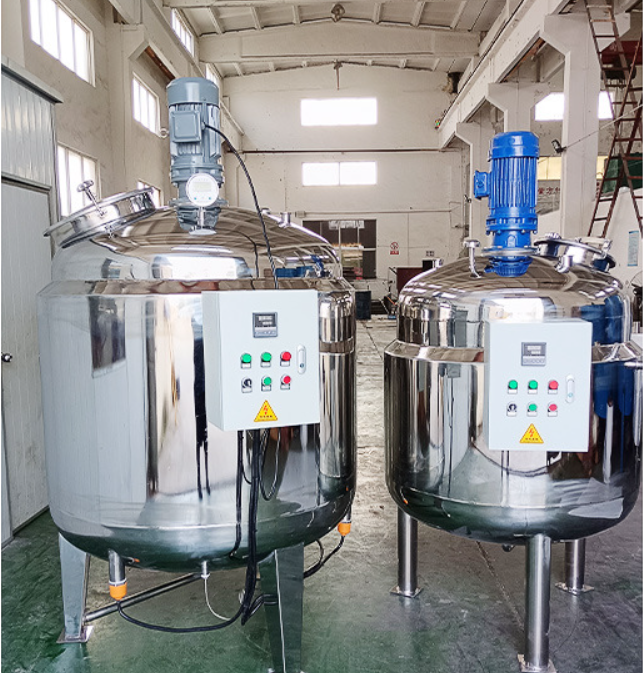
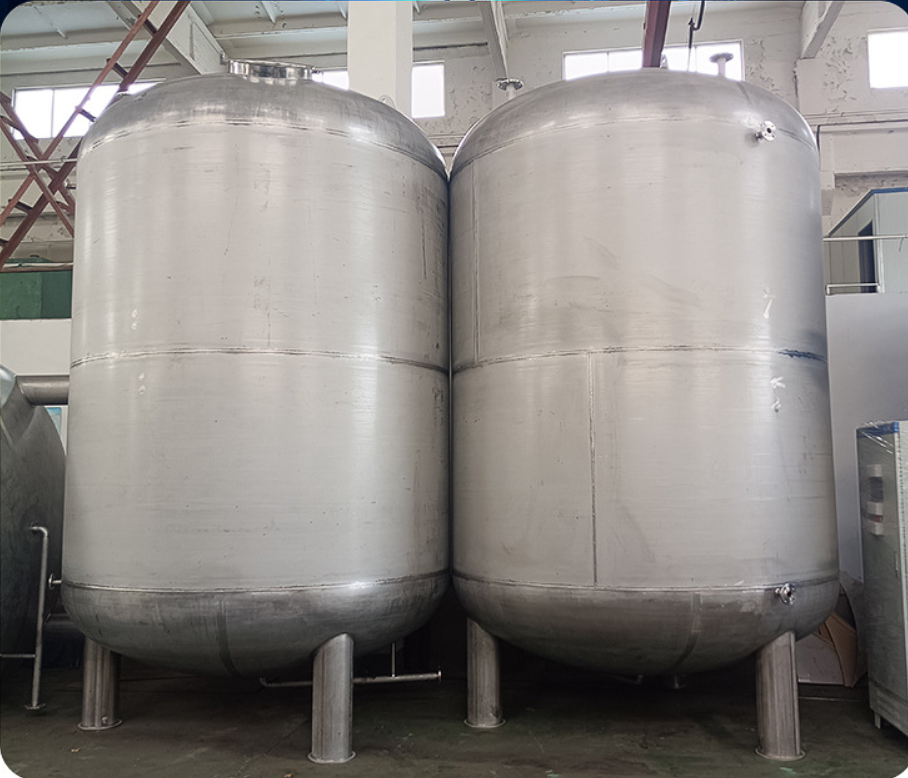
Stainless steel mixing tank, chemical liquid mixing machine, electric heating, single-layer homogene
- This equipment is a stainless steel vertical tank integrating electric heating, single-layer mixing, homogenization and high shearing, and biological fermentation functions. It is suitable for the production needs of chemical liquid mixing, biological strain fermentation, daily chemical lotion emulsification and other fields. The core material is 304/316L stainless steel, which can be customized according to the corrosiveness of materials....
- 咨询热线:18052739825
-
产品详情
This equipment is a stainless steel vertical tank integrating electric heating, single-layer mixing, homogenization and high shearing, and biological fermentation functions. It is suitable for the production needs of chemical liquid mixing, biological strain fermentation, daily chemical lotion emulsification and other fields. The core material is 304/316L stainless steel, which can be customized according to the corrosiveness of materials.
1、 Core structure and functional modules
The whole machine is a single-layer vertical cylindrical structure (without a jacket, can be customized with a half tube jacket for rapid heating or cooling), and all parts in contact with the material are polished to avoid material residue and pollution. The main functional modules are as follows:
Mixing and homogenization shear system
Low speed agitator: available in anchor, frame, and propulsion types, with adjustable speed from 0-100r/min, suitable for materials of different viscosities. Anchor/frame type is suitable for mixing medium to high viscosity chemical slurries and fermentation media, and can scrape off tank wall materials to prevent wall hanging; The push type is suitable for the circulation and mixing of low viscosity chemical liquids, ensuring the overall uniformity of the materials.
High shear homogenizing head: most of them are top inserted or bottom mounted, and the rotating speed can reach 2800-14000r/min. Through the high-speed rotation of stator and rotor, strong shear, impact and cavitation effects can be generated, which can refine the particles in chemical materials to micron level, or achieve emulsification homogenization of biological fermentation liquid, and can also be used for water oil two-phase mixing of daily chemical lotion.
Electric heating system
Adopting two methods: built-in electric heating tube or external electric heating rod+thermal oil (single-layer tank without jacket, direct heating efficiency is higher), the heating temperature can be adjusted from room temperature to 200 ℃, equipped with PID temperature controller, and the temperature control accuracy is ± 1 ℃.
The built-in electric heating tube directly contacts the material, heats up quickly, and is suitable for rapid heating reactions of chemical liquids; External thermal oil heating is gentler and suitable for the cultivation of temperature sensitive bacterial strains in biological fermentation processes, avoiding local overheating and killing of bacterial strains.
Exclusive configuration for biological fermentation
The top of the tank is equipped with sterile respirators, inoculation ports, pH detection ports, and dissolved oxygen detection ports to meet the sterile requirements of biological fermentation; A baffle can be installed inside the tank to disrupt the vortex generated by the rotation of the material and improve the contact efficiency between the fermentation broth and the bacterial strains.
Optional air distributor can be used to introduce sterile air into the fermentation broth, ensuring the respiratory needs of aerobic bacteria and adapting to the fermentation culture of probiotics, enzymes, and biofertilizer strains.
Sealing and auxiliary systems
The shaft seal adopts mechanical seal or magnetic seal, with low cost and easy maintenance, suitable for chemical liquids; Magnetic sealing is leak free and suitable for sterile environments in biological fermentation and mixing of highly toxic chemical materials.
Manholes, feeding ports, and sight glasses are installed on the top of the tank, and quick opening discharge valves are installed at the bottom of the tank; Chemical models can be equipped with explosion-proof motors and anti-static devices, while biological fermentation models can be equipped with CIP cleaning interfaces to achieve aseptic cleaning.
2、 Working principle (explained by scenario)
Chemical liquid mixing heating scenario
Add chemical raw materials (such as solvents, additives, and slurries) into the tank, start the low-speed stirring blade to circulate the animal material as a whole, and at the same time, turn on the electric heating system to raise the temperature to the set temperature; If the material contains agglomerated particles or needs to be emulsified, start the high shear homogenization head and crush the particles through high-speed shear to achieve uniform mixing. After the reaction is completed, the material is discharged through the bottom discharge valve.
Biological fermentation scene
First, sterilize the tank at high temperature, then introduce sterile fermentation medium and inoculate the bacterial strain through the inoculation port; Start the low-speed stirring blade to mix the culture medium, adjust the electric heating system to maintain the fermentation temperature (such as 28-37 ℃), and introduce sterile air through the air distributor; During the fermentation process, parameters can be monitored in real-time through pH and dissolved oxygen detection ports. After fermentation is complete, the homogenization head is turned on to emulsify the fermentation broth.
Emulsified homogenization scenario
Add the water phase and oil phase materials into the tank in proportion, mix them at low speed for preliminary mixing, then start the high shear homogenizer, use the shear force to break the two-phase interface, and form a stable lotion; If heating is needed to promote emulsification, the electric heating system can be started synchronously to improve emulsification efficiency and lotion stability.
3、 Core Features
One machine for multiple uses: compatible with chemical liquid mixing, biological fermentation, and emulsification homogenization, without the need for multiple devices, reducing workshop equipment investment costs.
Strong material adaptability: 304 stainless steel is standard, 316L stainless steel is optional for highly corrosive chemical materials, and mirror polished material is optional for biological fermentation, in compliance with GMP hygiene standards.
Flexible operation: The stirring speed and heating temperature can be accurately adjusted, and the homogenization head can be independently started and stopped to adapt to the process requirements of different materials.
Safe and reliable: Chemical machinery models are equipped with overload protection and explosion-proof devices; The biological fermentation machine is equipped with a sterile sealing design to prevent contamination by miscellaneous bacteria.
4、 Common specifications and selection points
1. List of parameters for commonly used industrial models
Effective volume mixing power, homogenization power, heating power, applicable scenarios
100L 1.5kW 4kW 6kW laboratory research and development/small batch production
500L 3kW 11kW 15kW Small and Medium sized Chemical/Biological Fermentation Plant
1000L 5.5kW 15kW 30kW Large scale Production Line
2. Selection key
Select based on material characteristics:
Strong acid and strong alkali chemical materials: choose 316L stainless steel+magnetic seal+explosion-proof motor;
Biological fermentation materials: choose 304 mirror polishing+sterile respirator+CIP cleaning interface;
High viscosity emulsion material: choose anchor type scraping wall stirring+high-power homogenization head (≥ 11kW).
Select according to process requirements:
Only mixed heating is required: the homogenization head can be removed, reducing equipment costs;
Aseptic fermentation is required: sterilization interfaces, sterile respirators, and other accessories must be selected;
Need for rapid heating: choose the built-in electric heating tube heating method; Gentle temperature control is required: choose external thermal oil heating.
5、 Applicable scenarios
Chemical industry: mixing and heating reactions of liquids such as coatings, adhesives, and cleaning agents, dispersion and grinding of dyes and pigments;
Biological fermentation industry: probiotic fermentation, enzyme production, cultivation of biofertilizer strains, fermentation of pharmaceutical intermediates;
Daily chemical industry: emulsification and homogenization of face cream, shampoo and laundry detergent, and mixing of paste materials.